

Premium Fastener Solutions for Diverse Applications
Hoonly delivers premium-grade fasteners that power industries worldwide. From corrosion-resistant stainless steel screws and dependable nuts and washers to robust self-tapping screws and secure expansion anchors, our products are engineered for excellence. Available in stainless steel, carbon steel, and high-strength steel, Hoonly fasteners provide unmatched reliability across construction, manufacturing, automotive, and countless other sectors. Whatever your project demands — we’ve got you fastened.
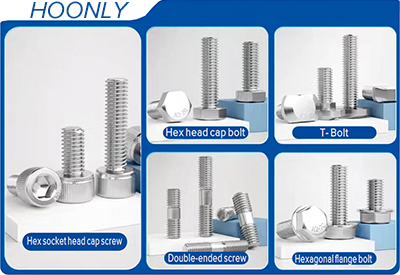
✅ Why Choose Us?

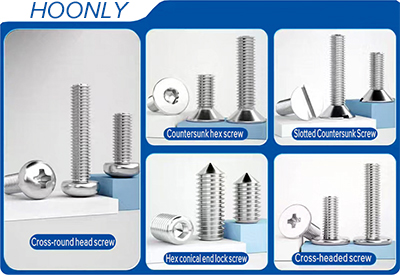
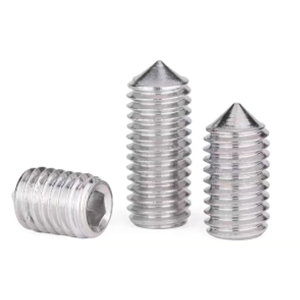
Stainless Steel Fastener
Stainless steel is a type of steel primarily known for its rust resistance and corrosion resistance. It offers excellent corrosion and high-temperature resistance, good compressive, tensile, and bending strength, as well as favorable plasticity and weldability, allowing it to be easily processed and shaped. Additionally, the material is non-toxic and harmless, releasing no hazardous substances, making it compliant with hygiene standards. Consequently, it is widely used in fields such as food processing and medical devices.
Our products include stainless steel grades such as 201, 304, 316, and 410. Among them, Grade 304 stainless steel offers strong corrosion resistance and is widely used in outdoor or food industry applications. Grade 316 stainless steel can withstand acidic or seawater environments, while Grade 410 is often used in self-drilling products due to its higher hardness.
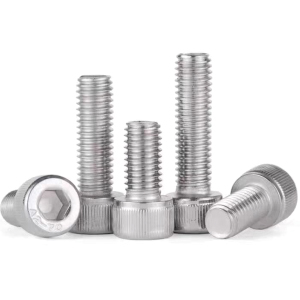
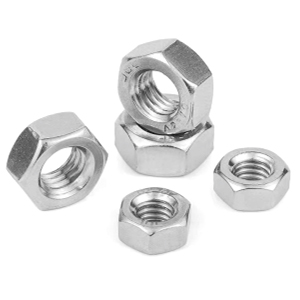
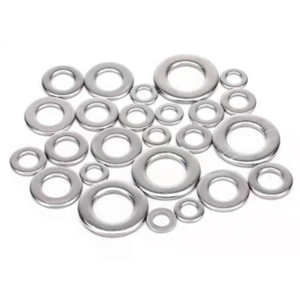

High Tensile Series Fastener
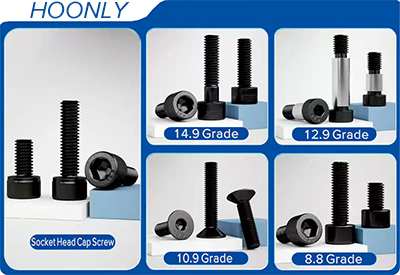
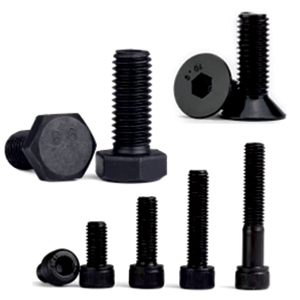
High-strength fastener materials primarily refer to steel grades rated 8.8, 10.9, and 12.9 under the EN ISO 898-1 standard. These steels exhibit exceptional mechanical strength—after specialized manufacturing processes such as spheroidizing annealing, cold forging, and quenching-tempering heat treatment, they can withstand extremely high torque loads, enabling reliable high-strength connections in critical structures.
The numerical grades encode key performance metrics: the first digit represents ultimate tensile strength (in 100MPa units), while the second denotes the ratio of yield strength to tensile strength. For instance, Grade 8.8 steel boasts a tensile strength of 800MPa and a yield strength of 640MPa (80% of tensile strength) .
Common materials for Grade 8.8 fasteners include 1035 steel and 1045 steel (corresponding to 35# and 45# steel in Chinese standards). Grades 10.9 and 12.9, classified as alloy steels, typically use materials like 40Cr (chromium steel) and 435 steel. These alloy steels incorporate elements such as chromium and molybdenum to enhance hardenability and mechanical performance.
Renowned for their superior load-bearing capacity and corrosion resistance—often enhanced through surface treatments including hot-dip galvanizing and Dacromet coating —these fasteners are widely adopted across high-demand industries.

Self Tapping Screws
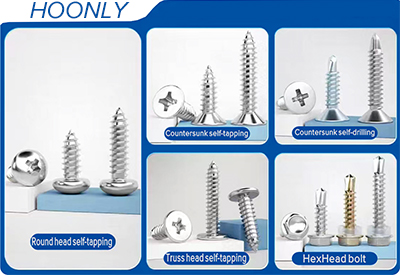
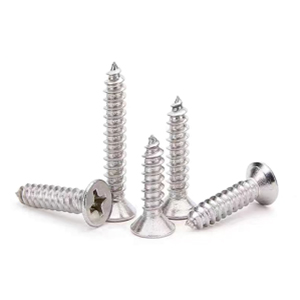
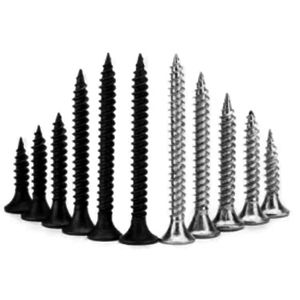
Self-tapping screws are a specialized type of fastener designed with a unique functionality: when driven into a material to be fastened, they utilize their own threads to tap, drill, extrude, and compress the material, creating a matching internal thread within it. This process enables the screw and the fastened material to form a tight, secure fit.
These screws typically feature a sharp, pointed tip, which allows them to easily penetrate and drive into the workpiece without the need for pre-drilling a pilot hole. It is this time-saving, pre-drill-free advantage that gives them their name—”self-tapping” screws.
Self-tapping screws are primarily used for connecting and securing relatively thin sheet materials. Common applications include joining color steel sheets together, as well as fastening color steel sheets to structural components like purlins and wall girders. Beyond sheet metal, they are also widely employed for joining and securing wood components.
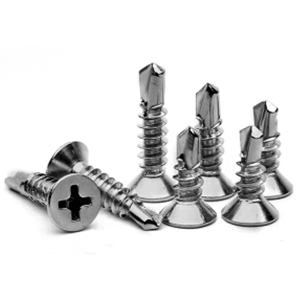
There are several common types of self-tapping screws, such as wood screws, self-drilling screws, and standard self-tapping screws. These variants differ significantly in key aspects:
- Hardness: Some are engineered for higher tensile strength to suit metal, while others are optimized for wood.
- Thread Design: Thread pitch, depth, and shape vary to match different material densities (e.g., finer threads for wood, coarser or specialized threads for metal).
- Intended Applications: Wood screws are tailored for timber connections, self-drilling screws excel at penetrating thicker or harder sheet metals, and standard self-tapping screws are versatile for general thin-sheet fastening tasks.

Expansion Bolt
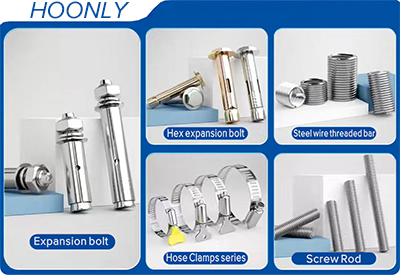
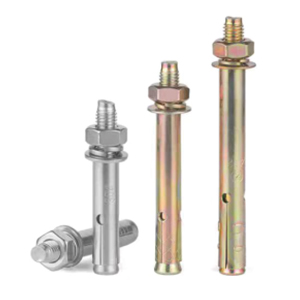
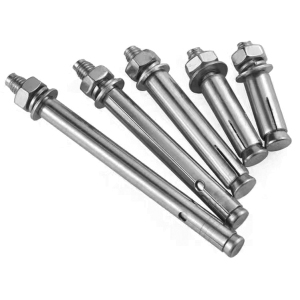
Expansion bolts are specialized threaded fasteners engineered to securely mount pipe supports, hangers, brackets, or various types of equipment onto solid surfaces such as walls, floor slabs, and columns. They are widely used in construction, mechanical installation, and infrastructure projects where reliable, load-bearing fixing is required.
The core securing principle of expansion bolts leverages a wedge-shaped taper to drive the expansion of key components, thereby generating strong frictional force between the fastener and the installation surface. This frictional force is what ensures long-term stability and prevents the bolt from loosening under load.
Typically, an expansion bolt assembly consists of two primary components:
- Bolt shank: The main threaded rod, whose tail end is machined into a conical shape. A critical design feature is that the inner diameter of this conical section is larger than the inner diameter of the expansion sleeve.
- Expansion sleeve: A cylindrical sleeve that fits around the conical tail of the bolt shank. It is made of durable materials (often metal or high-strength plastic) to withstand compression during installation.
Plastic Expansion screw
Executive standard: GB/Factory
Material: S.S304/4.8 or 8.8 Grade Steel/Nylon
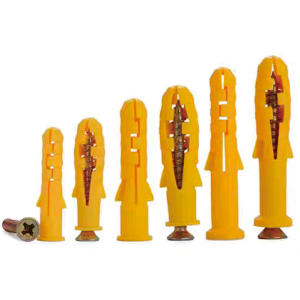
Plastic expansion bolts, also known as plastic tube anchors or nylon expansion bolts, are commonly used for securing lightweight components such as door and window frames, curtain rails, and storage shelves in non-load-bearing materials.
Internal Expansion Bolt
Executive standard: GB/Factory
Material: S.S304/4.8 or 8.8 Grade Steel/
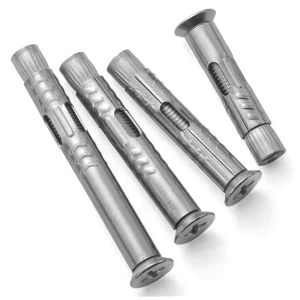
Internal expansion bolts are installed by first hammering the sleeve into the pre-drilled hole. Then, a special installation tool and hammer are used to drive the internal expansion plug in, causing it to expand.
Hammer Drive Anchor
Executive standard: GB/Factory
Material: S.S304/4.8 or 8.8 Grade Steel/
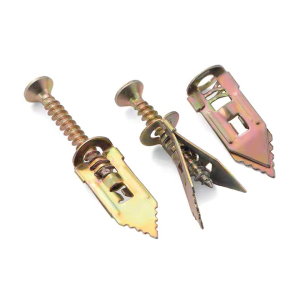
Hammer Drive Anchors are the simplest to install, consisting of a threaded nail and a sleeve. Simply place it into the hole, then strike the top of the nail with a hammer, which will cause the sleeve to expand and secure in place.

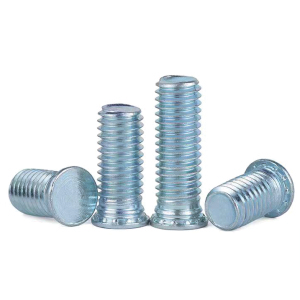
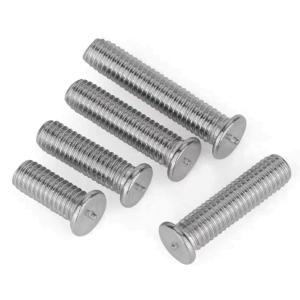
Welding And Riveting Screws
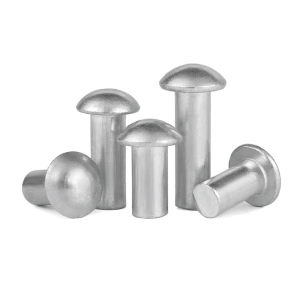
Riveting is a process of joining two or more workpieces using rivets. This method features simple and cost-effective equipment, high joint strength, and excellent tightness. It provides reliable performance under impact loads, with minimal loosening and low deformation at the joint.
Press Riveting is a fastening technique commonly used to secure studs onto metal sheets—such as iron or aluminum plates—where welding is not suitable. It is also one of the most widely applied methods for permanent fixation. The process involves using a punch or hydraulic press to firmly install fasteners like rivet nuts, rivet screws, or studs into the workpiece. Components joined by press riveting exhibit superior surface quality, minimal deformation, and high connection strength.
Welding is a fabrication technique that joins metals or thermoplastic materials through the application of heat, high temperature, or pressure. Essentially, it enables mutual attraction and penetration between the filler material and the base metal, creating a permanent and robust bond via atomic-level diffusion and cohesion.

Nylon Screws & Nuts
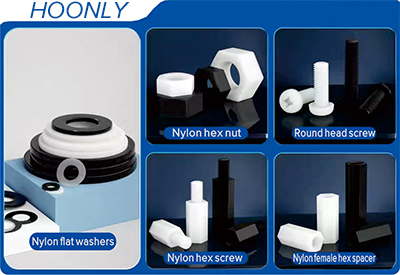
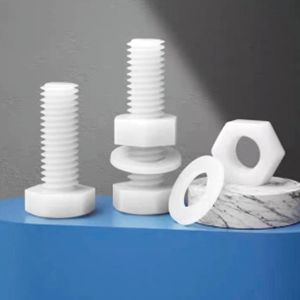
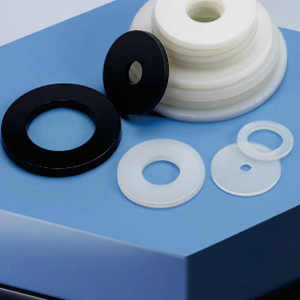
Nylon is a high-performance engineering plastic widely used to manufacture bolts and nuts, offering a reliable alternative to traditional metal fasteners such as copper and alloy components. Known for their excellent wear resistance, these nylon fasteners are ideal for applications that demand durability and reduced friction.
Key advantages include exceptional toughness, high tensile and flexural strength, and strong resistance to oil, shock, and vibration. Additionally, nylon bolts and nuts provide excellent electrical insulation, making them a safe choice for electrical and electronic equipment. Their low moisture absorption and superior dimensional stability ensure long-term performance without swelling or deformation, even in environments with frequent temperature or humidity changes.
Thanks to these properties, nylon bolts and nuts are widely used across various industries. They are commonly found in machinery, electronics, chemical processing, and construction—wherever a combination of strength, corrosion resistance, and electrical safety is required. Lightweight and non-conductive, they help reduce overall weight and prevent galvanic corrosion, extending the service life of assemblies.
Choose nylon bolts and nuts for efficient, insulating, and durable fastening in demanding applications.

The above categories are primarily classified according to universal standards such as ISO, GB (China National Standards), and ANSI. While minor variations may exist across different standards—such as in dimensional tolerances or naming conventions—the core categories and their English nomenclature remain highly consistent.
[wpforms id=”639″]